
We are pleased to share that the Supreme Court of India on 14.10.2026, has ruled in favour of our client, M/s Renganayaki Agency in The Assistant Commissioner of Central Tax, CGST Division v. Sreenivasa Rao Ravinuthala & Anr. The Court dismissed the Revenue's appeal as barred by limitation.
The appeal challenged an order of the NCLAT, Chennai dated 2 August 2023 which upheld the Resolution Plan of our client for Samyu Glass Pvt Ltd, which the NCLT, Hyderabad approved on 13 August 2021.
A Bench of Justice S.V.N. Bhatti and Justice N.V. Anjaria accepted our preliminary objection on limitation. The Court held that:
- The limitation period under Section 62 starts on the date the NCLAT pronounces its order. It does not start when a party chooses to apply for or collect a certified copy.
- The words "from the date of receipt of the order" cannot be read to leave limitation "fluctuating and indefinite".
- Under Section 12 of the Limitation Act, only the time actually needed to obtain the copy can be excluded. A party's own delay in applying for it cannot.
- Sixty days is the absolute outer limit for a Section 62 appeal. Once it passes, the right of appeal is extinguished.
The appeal was filed 16 days after that outer limit had expired, so the Court dismissed it without going into the merits. The ruling brings welcome certainty to the time-bound appellate framework under the IBC, and it makes the finality of approved resolution plans stronger.
A key takeaway for stakeholders is that parties cannot extend the statutory limitation period by delaying the procurement of a certified copy of the order.
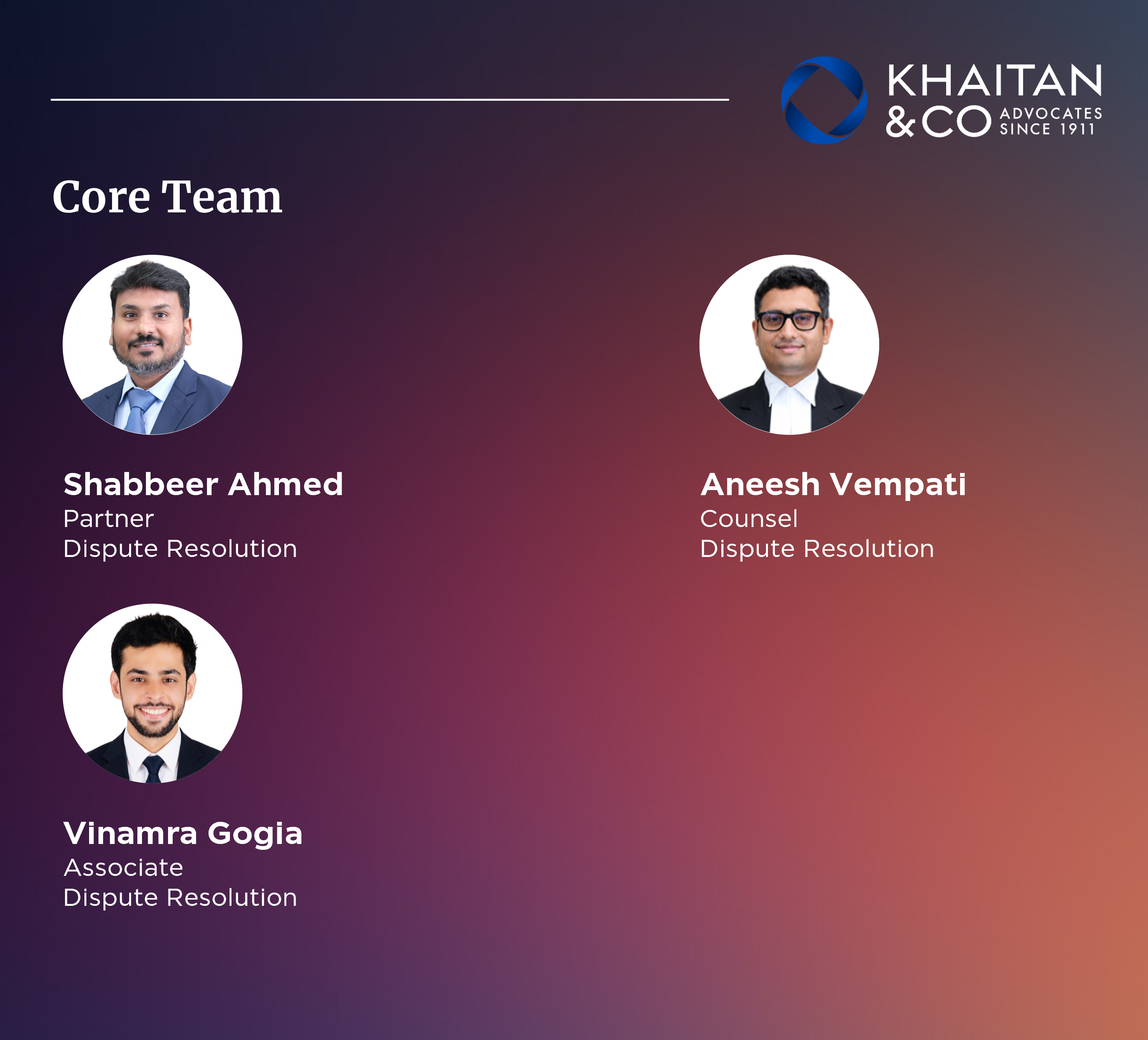

The Khaitan & Co consisted of Shabbeer Ahmed (Partner) with Aneesh Vempati (Counsel) and Vinamra Gogia (Associate).